Reactivity & Chemical Bonding
Chemical Behavior & Oxidation States
Hydrogen is a versatile reducing agent that burns vigorously in air/oxygen to produce pure water with high energy density.
H
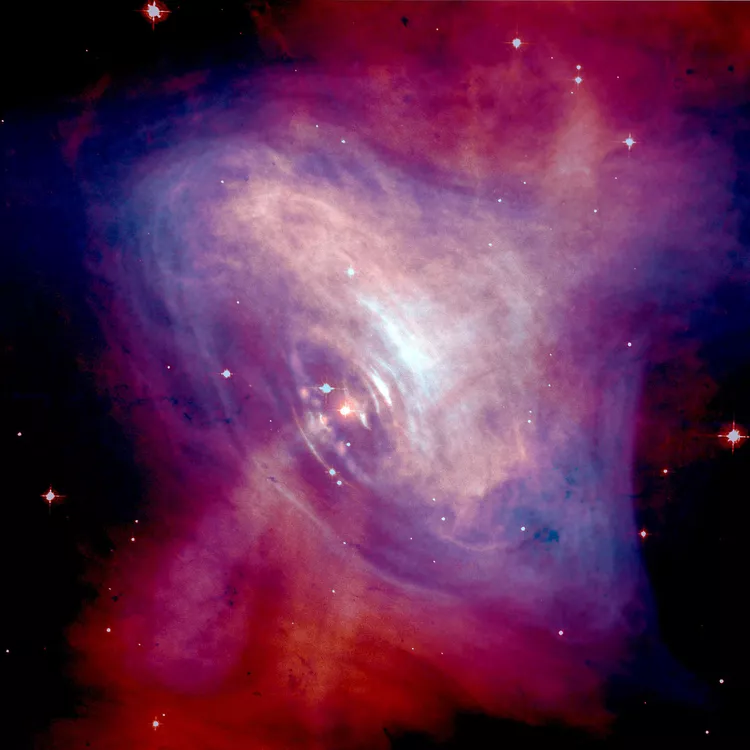
Hydrogen is the simplest, lightest, and most abundant chemical element in the universe, constituting roughly 75% of all baryonic mass. It acts as the primary stellar fuel and the elemental backbone of water and organic molecules.
Simulate concentric quantum energy levels, observe valence electron spins, and examine live atomic clouds in full 3D.
Experiment with Aufbau subshell ordering, explore orbital occupancy, and analyze quantum configuration exceptions.
Hydrogen is a versatile reducing agent that burns vigorously in air/oxygen to produce pure water with high energy density.
Used in ammonia synthesis (Haber process), clean fuel cells, petroleum hydrocracking, and liquid rocket propellant.
Hydrogen is present in every living cell, forming water (60% of human weight) and generating the proton motive force that drives ATP synthase.
Elements like Hydrogen are synthesized through stellar nucleosynthesis and supernovae r-processes. On Earth, Hydrogen is concentrated in specific ore deposits or synthesized in nuclear accelerators.
Hydrogen (H) has an atomic number of 1 and a standard atomic mass of 1.008 u. It is positioned in Period 1, Group 1, in the S-block, and is classified within the Reactive Nonmetal category.
The ground-state electron configuration of Hydrogen is 1s¹. Its 1 electrons are distributed across 1 principal energy levels (1).
Hydrogen follows standard Aufbau principle orbital filling. Transition metals and heavy elements optimize their shell filling based on subshell exchange energy and electrostatic stability.
Used in ammonia synthesis (Haber process), clean fuel cells, petroleum hydrocracking, and liquid rocket propellant.