Reactivity & Chemical Bonding
Chemical Behavior & Oxidation States
Iron oxidizes in moist air to form porous hydrated iron oxide (rust) and exhibits common +2 and +3 oxidation states.
Fe
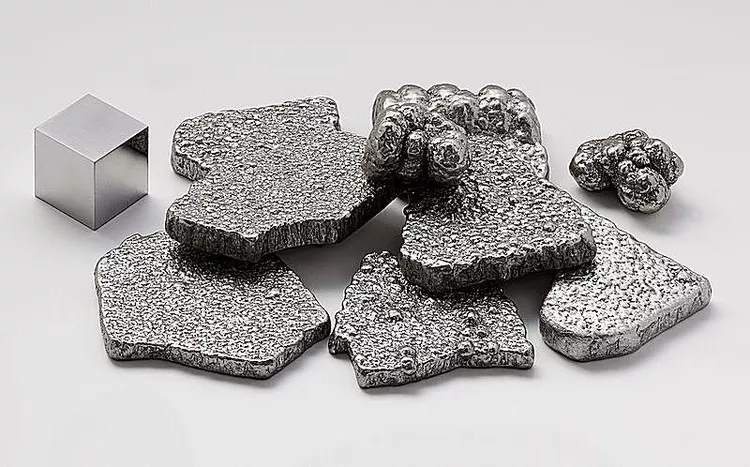
Iron is the most abundant element on Earth by mass and the principal metal of modern engineering. In biology, it forms the active oxygen-binding center in hemoglobin.
Simulate concentric quantum energy levels, observe valence electron spins, and examine live atomic clouds in full 3D.
Experiment with Aufbau subshell ordering, explore orbital occupancy, and analyze quantum configuration exceptions.
Iron oxidizes in moist air to form porous hydrated iron oxide (rust) and exhibits common +2 and +3 oxidation states.
Forms 90% of all refined metals worldwide, used in structural steel, automotive chassis, and tools.
Iron is critical for life, acting as the oxygen carrier in hemoglobin and the catalytic core in cytochrome enzymes.
Elements like Iron are synthesized through stellar nucleosynthesis and supernovae r-processes. On Earth, Iron is concentrated in specific ore deposits or synthesized in nuclear accelerators.
Iron (Fe) has an atomic number of 26 and a standard atomic mass of 55.845 u. It is positioned in Period 4, Group 8, in the D-block, and is classified within the Transition Metal category.
The ground-state electron configuration of Iron is [Ar]3d⁶4s². Its 26 electrons are distributed across 4 principal energy levels (2, 8, 14, 2).
Iron follows standard Aufbau principle orbital filling. Transition metals and heavy elements optimize their shell filling based on subshell exchange energy and electrostatic stability.
Forms 90% of all refined metals worldwide, used in structural steel, automotive chassis, and tools.