Z = 46 Quantum Anomaly
Pd
Launch 3D Atom & Orbitals Lab

Palladium

Pd

Standard Atomic Mass: 106.42 u
Period 5Group 10D-Block
Chemical Specimen/Pd
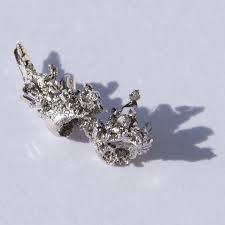
Palladium specimen
Concentric Electron Shells4 Energy Levels
n=1: 2e⁻→
n=2: 8e⁻→
n=3: 18e⁻→
n=4: 18e⁻
Scientific Monograph • Transition Metal
3D Atom Simulator

Palladium (Pd) Scientific Profile

Palladium is a rare, lustrous silvery-white transition metal and a premier member of the platinum group metals (PGM). Discovered in 1803 by William Hyde Wollaston, it possesses an extraordinary affinity for hydrogen, capable of absorbing up to 900 times its own volume of H₂ gas at standard conditions. It is an indispensable heterogeneous catalyst in automotive emission systems, pharmaceutical synthesis (Suzuki coupling), and clean hydrogen energy tech.

Interactive Virtual Labs Available for Palladium

3D Orbitals & Valence Lab

Simulate concentric quantum energy levels, observe valence electron spins, and examine live atomic clouds in full 3D.

Launch 3D Atom Lab

Electronic Configuration Lab

Experiment with Aufbau subshell ordering, explore orbital occupancy, and analyze quantum configuration exceptions.

Launch Config Lab
Electron Config
[Kr]4d¹⁰
Electronegativity
2.2 Pauling
Year Discovered
1803
Orbital Shells
4 Principal Levels
Orbital Block
d-block orbital
Group / Period
G: 10 • P: 5

Quantum Stability Configuration Exception

Instead of the textbook Aufbau filling order [Kr] 4d⁸ 5s², Palladium achieves lowest ground state energy as [Kr] 4d¹⁰. Completely filled 4d¹⁰ subshell with 0 electrons in the 5s shell (5s⁰). The extreme stability of a closed d-shell outweighs the cost of promoting two 5s electrons into the 4d orbital, making Palladium unique.

Etymology & Discovery History
Name OriginAsteroid 'Pallas' (Greek goddess Pallas Athena)
Literal MeaningGoddess of wisdom / Defender
Discovery HubDiscovered by William Hyde Wollaston in London, UK (1803)
Reactivity & Chemical Bonding

Chemical Behavior & Oxidation States

Palladium is resistant to corrosion and atmospheric tarnishing at ambient temperatures. It does not react with oxygen under standard conditions but dissolves readily in concentrated nitric acid and hot sulfuric acid, as well as aqua regia. Remarkably, palladium acts as a super-sponge for hydrogen, expanding slightly as it forms palladium hydride (PdHₓ) without losing its metallic ductility.

Technological Utility

Industrial & Energy Applications

Over 80% of all mined palladium is used in automotive catalytic converters to convert toxic hydrocarbons, carbon monoxide, and nitrogen oxides into harmless gases. It is also vital in Suzuki-Miyaura cross-coupling reactions (Nobel Prize in Chemistry 2010), multilayer ceramic capacitors (MLCCs) in smartphones, hydrogen purification membranes, dental alloys, and fine jewelry.

Biological Role

Biomedical Profile & Toxicity

Palladium has no known biological function in the human body. Because of its exceptional resistance to corrosion and biological inertness, palladium-gold alloys are widely used in high-durability dental crowns and specialized biomedical implants.

Geochemistry & Abundance

Cosmic & Terrestrial Occurrence

Elements like Palladium are synthesized through stellar nucleosynthesis and supernovae r-processes. On Earth, Palladium is concentrated in specific ore deposits or synthesized in nuclear accelerators.

Frequently Asked Questions about Palladium

Q

What are the key physical and atomic properties of Palladium?

Palladium (Pd) has an atomic number of 46 and a standard atomic mass of 106.42 u. It is positioned in Period 5, Group 10, in the D-block, and is classified within the Transition Metal category.

Q

What is the electron configuration of Palladium?

The ground-state electron configuration of Palladium is [Kr]4d¹⁰. Its 46 electrons are distributed across 4 principal energy levels (2, 8, 18, 18).

Q

Why does Palladium exhibit an electron configuration exception?

Completely filled 4d¹⁰ subshell with 0 electrons in the 5s shell (5s⁰). The extreme stability of a closed d-shell outweighs the cost of promoting two 5s electrons into the 4d orbital, making Palladium unique.

Q

What are the primary commercial and laboratory uses of Palladium?

Over 80% of all mined palladium is used in automotive catalytic converters to convert toxic hydrocarbons, carbon monoxide, and nitrogen oxides into harmless gases. It is also vital in Suzuki-Miyaura cross-coupling reactions (Nobel Prize in Chemistry 2010), multilayer ceramic capacitors (MLCCs) in smartphones, hydrogen purification membranes, dental alloys, and fine jewelry.