Reactivity & Chemical Bonding
Chemical Behavior & Oxidation States
Gold is the most chemically unreactive metal in the periodic table, unaffected by air, moisture, and single acids.
Au
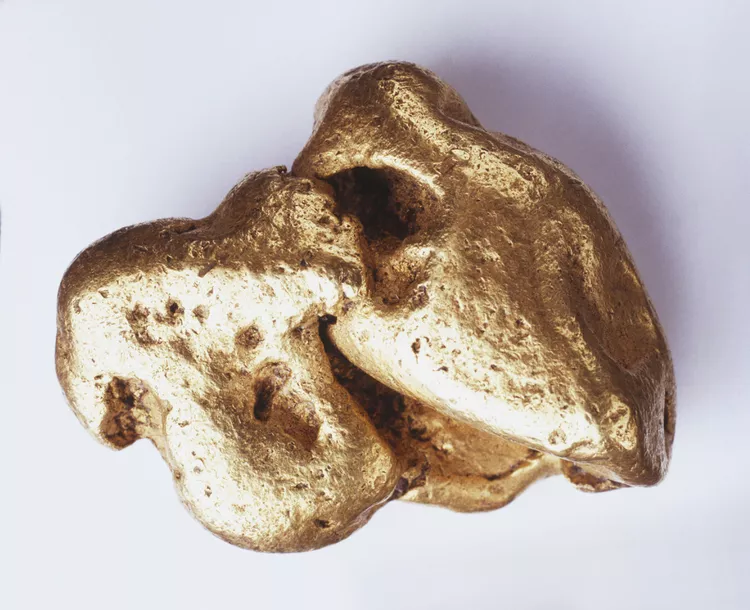
Gold is a dense, corrosion-proof noble metal revered since antiquity for its beauty, high electrical conductivity, and chemical nobility.
Simulate concentric quantum energy levels, observe valence electron spins, and examine live atomic clouds in full 3D.
Experiment with Aufbau subshell ordering, explore orbital occupancy, and analyze quantum configuration exceptions.
Instead of the textbook Aufbau filling order [Xe] 4f¹⁴ 5d⁹ 6s², Gold achieves lowest ground state energy as [Xe] 4f¹⁴ 5d¹⁰ 6s¹. Strong relativistic contraction of the 6s orbital combined with filled 5d¹⁰ subshell stability gives Gold its unique nobility and golden hue.
Gold is the most chemically unreactive metal in the periodic table, unaffected by air, moisture, and single acids.
Used in aerospace reflective heat shields, semiconductor wire bonding, fine jewelry, and financial reserves.
Gold is biologically inert and non-toxic in its metallic form, with historical therapeutic use in gold salt arthritis treatments.
Elements like Gold are synthesized through stellar nucleosynthesis and supernovae r-processes. On Earth, Gold is concentrated in specific ore deposits or synthesized in nuclear accelerators.
Gold (Au) has an atomic number of 79 and a standard atomic mass of 196.97 u. It is positioned in Period 6, Group 11, in the D-block, and is classified within the Transition Metal category.
The ground-state electron configuration of Gold is [Xe]4f¹⁴5d¹⁰6s¹. Its 79 electrons are distributed across 6 principal energy levels (2, 8, 18, 32, 18, 1).
Strong relativistic contraction of the 6s orbital combined with filled 5d¹⁰ subshell stability gives Gold its unique nobility and golden hue.
Used in aerospace reflective heat shields, semiconductor wire bonding, fine jewelry, and financial reserves.