Theory and background
What is rc lab?
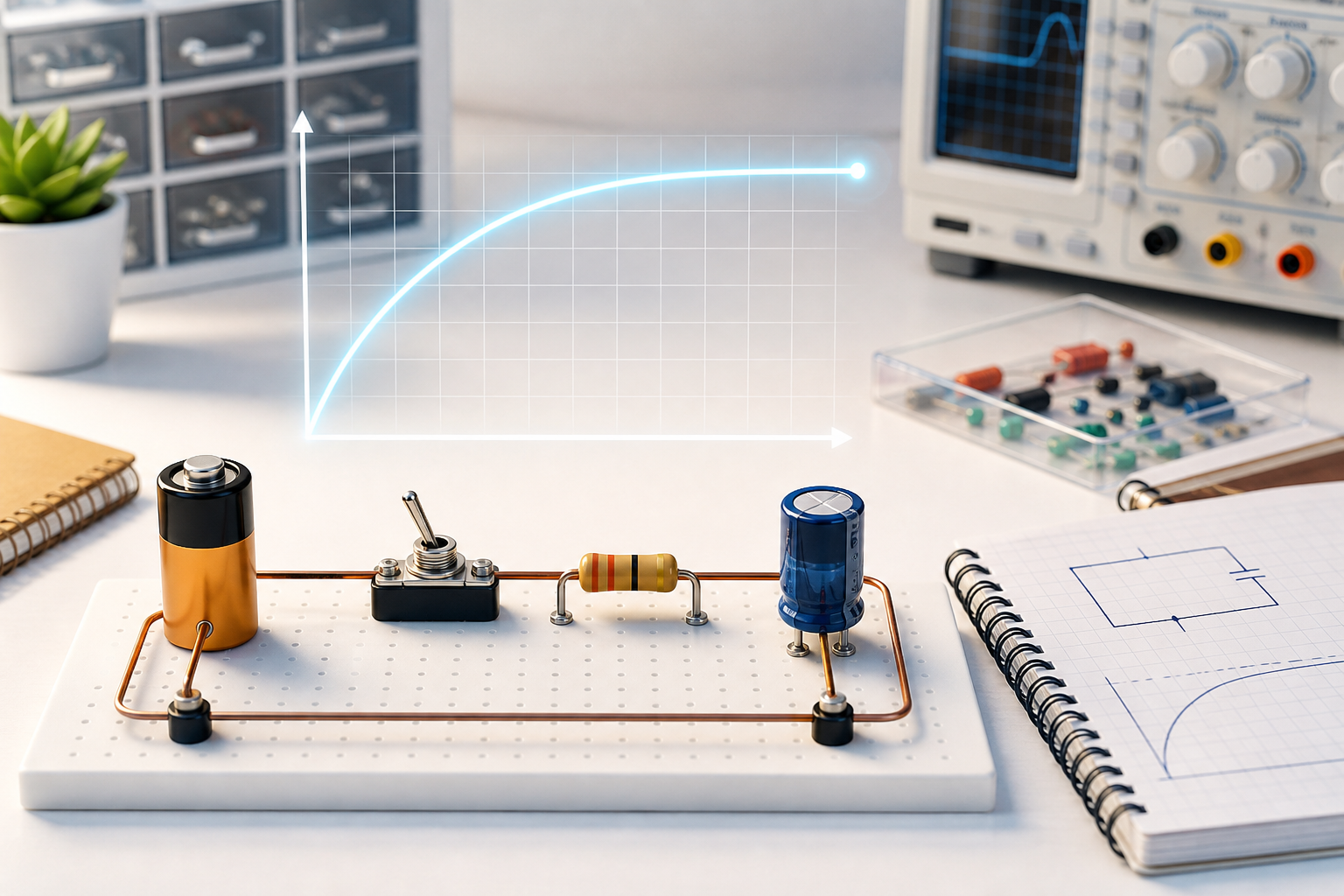
An RC circuit contains a resistor and capacitor. When connected to a source, the capacitor charges gradually; when discharged, its voltage falls exponentially.
Explore how capacitors charge and discharge through resistors. Adjust circuit values and watch voltage change over time.

Experiment guide
Start with the concept, open the lab, then compare the observed motion with the key relationship. The sections below keep the theory, workflow, and common questions easy to scan.
Theory and background
An RC circuit contains a resistor and capacitor. When connected to a source, the capacitor charges gradually; when discharged, its voltage falls exponentially.
How the simulation works
Launch the lab, adjust the available controls, and observe the result immediately. Use the simulation to connect the equation with what changes on screen.
Frequently asked questions
An RC circuit combines a resistor and capacitor, producing time-dependent voltage changes.
The time constant tau = R C sets how quickly the capacitor charges or discharges.
The charging or discharging rate depends on the remaining voltage difference, creating exponential behavior.
Increasing capacitance increases the time constant, so voltage changes more slowly.