Theory and background
What is uniform motion?
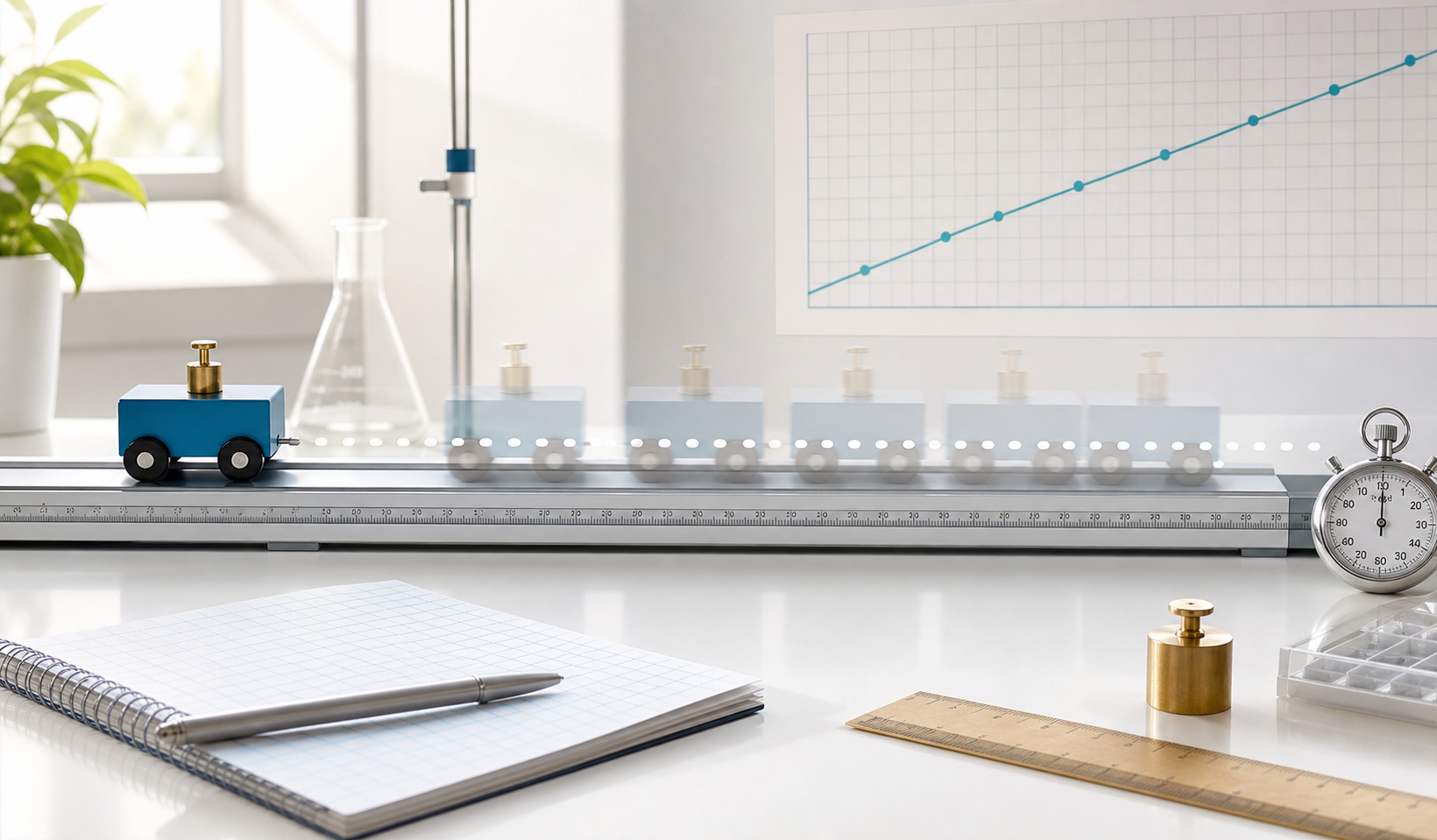
Uniform motion occurs when an object travels equal distances in equal time intervals. Its velocity remains constant, so the distance-time graph is a straight line.
Explore constant velocity motion with a simple moving-object lab. Adjust values, observe position over time, and connect the result with distance-time graphs.

Experiment guide
Start with the concept, open the lab, then compare the observed motion with the key relationship. The sections below keep the theory, workflow, and common questions easy to scan.
Theory and background
Uniform motion occurs when an object travels equal distances in equal time intervals. Its velocity remains constant, so the distance-time graph is a straight line.
How the simulation works
Launch the lab, adjust the available controls, and observe the result immediately. Use the simulation to connect the equation with what changes on screen.
Frequently asked questions
Uniform motion means an object moves at constant velocity, covering equal distances in equal time intervals.
It shows how position changes with time. For uniform motion, the graph is a straight line.
The slope of a distance-time graph represents velocity.
For ideal uniform motion, acceleration is zero because velocity does not change.