Theory and background
What is speed of light?
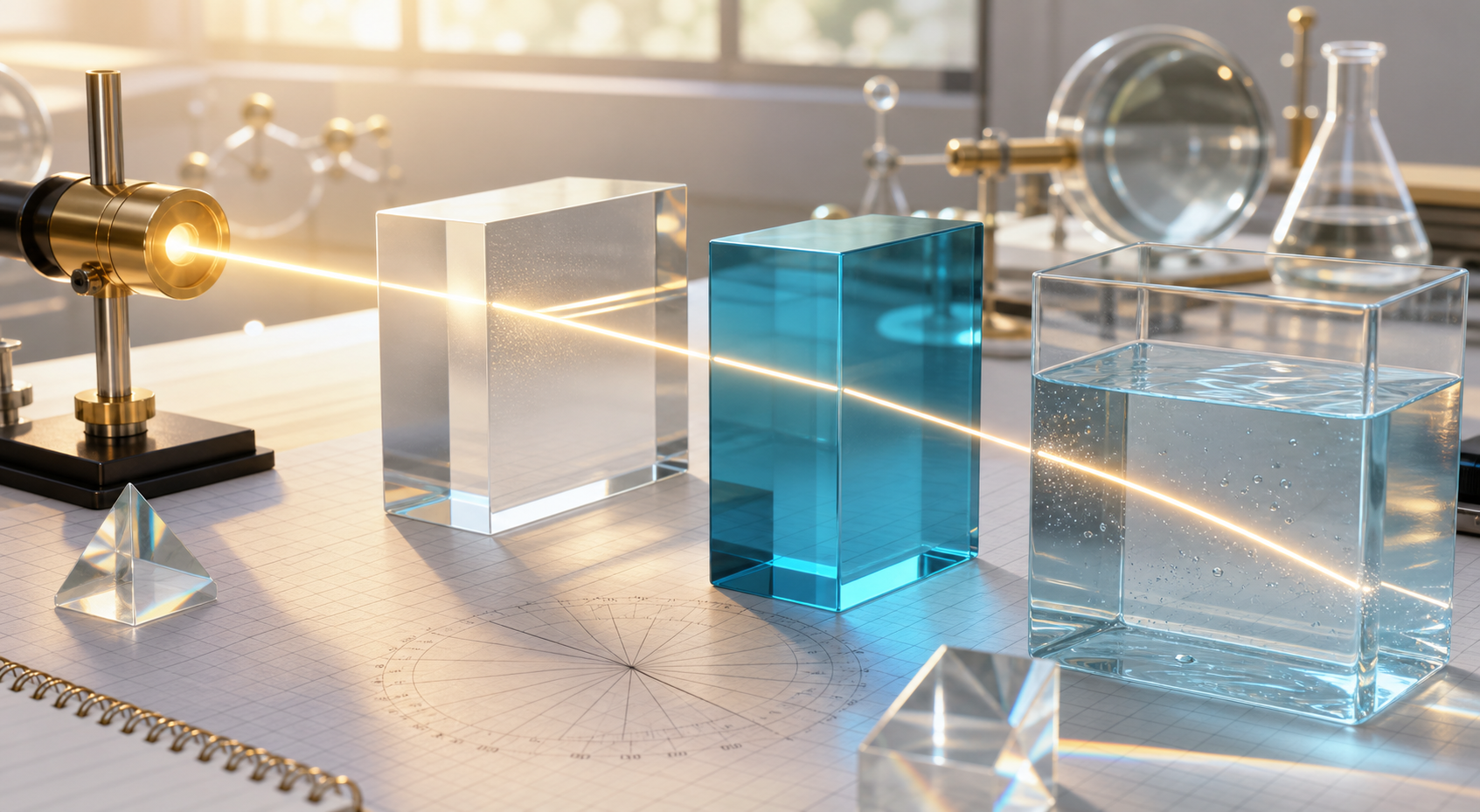
Light travels fastest in a vacuum and slows down in materials such as water or glass. The refractive index describes how much a medium reduces light speed.
Explore how light travels and why its speed changes in different materials. Use the simulation to connect propagation speed with refractive index.

Experiment guide
Start with the concept, open the lab, then compare the observed motion with the key relationship. The sections below keep the theory, workflow, and common questions easy to scan.
Theory and background
Light travels fastest in a vacuum and slows down in materials such as water or glass. The refractive index describes how much a medium reduces light speed.
How the simulation works
Launch the lab, adjust the available controls, and observe the result immediately. Use the simulation to connect the equation with what changes on screen.
Frequently asked questions
The speed of light in vacuum is approximately 299,792,458 meters per second.
Yes. Light travels slower in glass than in vacuum because glass has a refractive index greater than one.
Refractive index compares light speed in vacuum with light speed in a material.
Light bends when it changes speed while crossing between materials with different refractive indices.